365 Meds Online 24-7 – Finding your way to a better lifestyle

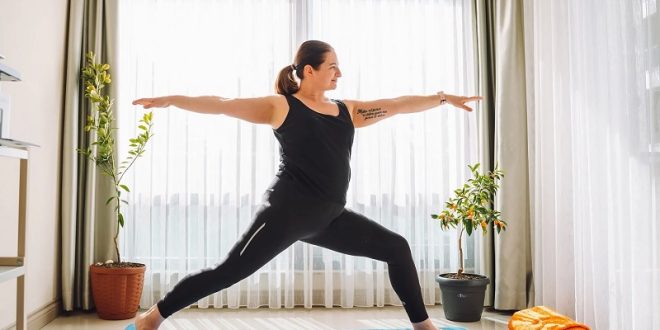
Clocking out of work rarely means clocking out of stress. For most professionals, the transition from a demanding workday to a restful evening is a bumpy one. Even after the laptop is closed and the commute is over, the nervous system often remains trapped in a state of high alert. This lingering adrenaline manifests physically in clenched jaws, tight hip flexors, shallow breathing, and a heavy tension situated squarely between the shoulder blades.
To achieve actual rest, you have to actively signal to your body that the workday is done. A targeted evening yoga practice is one of the most effective ways to facilitate this shift. By combining intentional physical postures with deep, rhythmic breathing, you can transition your body out of its sympathetic fight-or-flight mode and into the parasympathetic rest-and-digest state. This is not about building strength, sweating, or pushing your flexibility to its limits. Evening yoga is entirely about unwinding mechanical tension, quieting mental chatter, and preparing your physical form for deep, restorative sleep.
The Physiology of Evening Tension
Understanding where your body stores stress is the first step in releasing it. When you spend eight to ten hours sitting at a desk, staring at a monitor, or managing high-stakes situations, your body adapts to that environment. Your shoulders round forward to meet the keyboard, your chest caves slightly inward, and your hip flexors remain in a constant state of contraction.
Simultaneously, chronic stress alters your breathing patterns. You begin taking shallow breaths into the upper chest rather than utilizing the full capacity of your diaphragm. This shallow breathing continuously feeds a low-level panic response back to the brain. An effective evening yoga sequence directly counteracts these modern occupational hazards by opening the front body, releasing the hips, and demanding deep, diaphragmatic breaths that slow your resting heart rate.
Creating the Right Environment for Downregulation
Before stepping onto the mat, it is crucial to set an environment that supports relaxation. Practicing in the middle of a cluttered living room with the television blaring news headlines will severely limit the benefits of your sequence.
Dim the overhead lights and opt for warm, soft lamp light. Ensure the room temperature is comfortable, perhaps slightly cooler than daytime levels, as a drop in body temperature naturally signals the brain that it is time to sleep. Put your phone in another room to eliminate the temptation of checking one last email. This physical space should become a sanctuary where productivity is entirely irrelevant.
The Essential Evening Decompression Sequence
The following sequence is designed to be performed seamlessly, moving from grounding postures to deep muscle releases, and finally into total relaxation. Focus entirely on the physical sensations and the steady rhythm of your breathing.
Wide-Knee Child’s Pose (Balasana)
This is the ultimate posture of surrender and an ideal starting point for your evening practice. Kneel on your mat, bring your big toes to touch, and separate your knees slightly wider than your torso. Walk your hands forward until your arms are fully extended and your forehead rests heavily on the mat.
Let your hips sink deeply toward your heels. If your hips are exceptionally tight, place a rolled blanket between your calves and hamstrings for support. In this posture, your spine elongates naturally, and the gentle compression of your abdomen against your thighs promotes a soothing internal massage with every breath. Focus on expanding your lower back and ribcage with every inhalation, and melting further into the floor with every exhalation.
Cat-Cow Flow (Marjaryasana-Bitilasana)
Transitioning to your hands and knees, ensure your wrists are directly under your shoulders and your knees are under your hips. This dynamic movement is essential for releasing the rigidity that builds up in the spine after hours of sitting motionless.
As you inhale, gently drop your belly toward the floor, lift your tailbone, and draw your chest forward through your upper arms, gazing slightly upward for Cow Pose. As you exhale, aggressively press the floor away, tuck your chin to your chest, and round your upper back toward the ceiling for Cat Pose. Move slowly, allowing the length of your breath to dictate the speed of your movement. Repeat this cycle for ten full breaths, effectively flushing the spinal column with fresh synovial fluid and releasing tension in the cervical and lumbar spine.
Thread the Needle
From your tabletop position, inhale and reach your right arm toward the ceiling, opening your chest to the right side of the room. As you exhale, sweep that right arm underneath your left arm, bringing your right shoulder and the right side of your head to rest gently on the mat.
Keep your hips elevated and square. This posture provides an incredibly targeted stretch to the deltoids, the rhomboids, and the stubborn knots that form around the shoulder blades from typing and driving. Hold this for five deep breaths before pressing back up and repeating the movement on the left side.
Low Lunge (Anjaneyasana)
From a kneeling position, step your right foot forward so your right knee is bent at a perfect right angle, keeping your left knee resting on the mat behind you. Place your hands on your front thigh or let them rest lightly on the floor framing your front foot.
Allow your pelvis to sink forward and down. This movement directly targets the psoas and the complex network of hip flexors that become chronically shortened and tight during long periods of sitting. Releasing the hip flexors is mandatory for relieving lower back pain, as tight hips will relentlessly pull the lower spine out of its natural alignment. Breathe deeply into the front of your left hip for a full minute before slowly switching sides.
Seated Forward Fold (Paschimottanasana)
Sit on your mat with your legs extended straight out in front of you. Flex your feet so your toes point toward the ceiling. Inhale deeply to lengthen your spine, sitting up as tall as possible. As you exhale, hinge from your hips—not your lower back—and walk your hands down your legs.
Do not force your hands to reach your toes. The goal is not extreme flexibility, but rather a profound, passive stretch along the entire posterior chain of your body, from your heels, up through your hamstrings, across your glutes, and up your back. Let your head hang heavy. Forward folds naturally draw your attention inward, calming the central nervous system and silencing intrusive thoughts.
Supine Spinal Twist (Supta Matsyendrasana)
Transition to lying flat on your back. Draw both knees firmly into your chest and give yourself a tight squeeze, flattening your lower back against the floor. Extend your arms straight out to your sides in a T-shape. As you exhale, let both knees fall heavily to the right side of your body. Turn your head to gaze softly over your left shoulder.
Twists act as a vital reset mechanism for the nervous system. They neutralize the spine after the forward and backward bending of the previous poses and gently stimulate the digestive organs. Breathe deeply into your left ribcage, feeling the intercostal muscles stretch and release. Stay here for ten breaths before bringing your knees back to center and dropping them to the left.
Legs-Up-The-Wall (Viparita Karani)
If you only have time for a single posture before bed, make it this one. Scoot your hips as close to a blank wall as possible, lie on your back, and extend your legs straight up the wall. Your body should form an L-shape. Let your arms rest comfortably by your sides with your palms facing the ceiling to keep your chest open.
This passive inversion is a powerhouse for relaxation. It reverses the effects of gravity, draining pooled blood and lymphatic fluid from the feet and lower legs back toward the heart. This rapid shift in circulation triggers a massive parasympathetic response, aggressively lowering your blood pressure and heart rate. Remain in this posture for five to ten minutes, simply observing the gentle rise and fall of your belly.
Corpse Pose (Savasana)
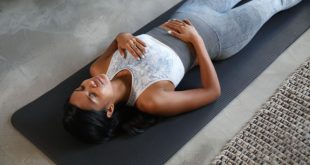
Conclude your evening sequence by sliding away from the wall and lying completely flat on your back. Separate your feet wider than hip-distance apart and let your toes fall open naturally. Rest your arms alongside your body, palms up, and close your eyes.
Savasana is the practice of conscious relaxation. It is the time when your body integrates the physical releases of the previous postures. Scan your body from the crown of your head to the tips of your toes, intentionally releasing any final gripping in your jaw, your forehead, or your hands. Allow your breathing to become entirely natural and effortless. Stay here until your mind feels still, your body feels heavy, and you are fully ready to transition into a restful night of sleep.