 365 Meds Online 24-7 – Finding your way to a better lifestyle

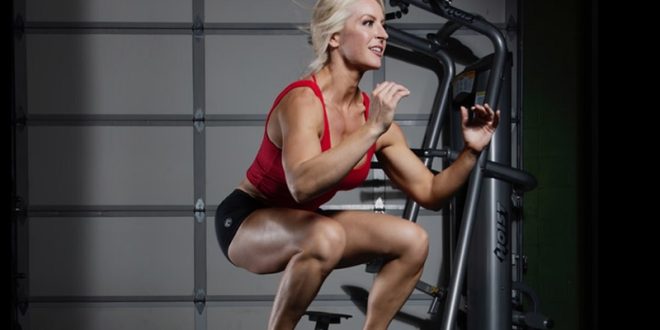
The pursuit of physical strength is frequently misunderstood as a simple matter of moving heavy objects from point A to point B. Walk into any commercial gym, and you will see countless individuals loading up barbells or pushing machine levers with maximum effort but minimal control. While brute force has its place, true physical resilience is built on a foundation of stability. Without stability, strength is not only inefficient, but it is also a liability that inevitably leads to joint wear and acute injury.
Strength and stability are two sides of the same physiological coin. Strength is the ability to produce force, while stability is the ability to control that force across a designated range of motion. When you integrate specific techniques designed to enhance both simultaneously, you upgrade your entire nervous system. The result is a body that performs better in athletic endeavors, remains pain-free during everyday tasks, and ages with remarkable durability. Mastering a few essential exercise techniques can completely transform the way your body generates power and absorbs physical stress.
The Foundation of Movement: Core Bracing and Anti-Movement
When most people hear the word “core,” they visualize the superficial abdominal muscles and immediately think of sit-ups or crunches. However, the core is actually a complex cylinder of musculature that wraps around the entire torso, including the obliques, the lower back muscles, the pelvic floor, and the diaphragm. Its primary biomechanical job is not to flex the spine, but to resist unwanted movement and protect the delicate lumbar vertebrae.
Mastering Intra-Abdominal Pressure
Before you attempt to lift a heavy weight, you must learn how to brace properly. A common mistake is simply “sucking in” the stomach, which actually destabilizes the spine. Instead, you should aim to create intra-abdominal pressure. Imagine wrapping a tight belt around your waist. Now, take a deep breath into your belly and try to push your abdominal muscles outward in all 360 degrees against that imaginary belt. This expansion stiffens the torso, creating a solid pillar of support. Whether you are carrying heavy groceries or preparing for a heavy barbell squat, establishing this bracing technique ensures that force transfers efficiently from your lower body through your trunk without leaking energy into your lower back.
Implementing Anti-Movement Training
To build a bulletproof midsection, shift your focus away from crunches and toward anti-movement exercises. These are movements where your limbs are active, but your core must fight to remain perfectly still. Anti-extension exercises, such as the ab wheel rollout or a heavily weighted plank, force the anterior core to prevent the lower back from sagging toward the floor. Anti-rotation exercises, like the Pallof press, require you to stand parallel to a cable machine and press a cable straight out in front of your chest while resisting the tension pulling you sideways. These techniques train the core to function exactly as it needs to in real life: as a dynamic stabilizer.
Perfecting the Hip Hinge for Posterior Chain Power
The muscles on the back of your body, known as the posterior chain, are the engine room of human movement. The glutes, hamstrings, and spinal erectors are responsible for running, jumping, and lifting safely. Yet, modern sedentary lifestyles leave these muscles notoriously weak and underactive. The key to unlocking posterior chain strength is mastering the hip hinge.
Unlike a squat, which involves bending deeply at both the knees and the hips to move the torso vertically, a hip hinge involves minimal knee bend and maximal hip flexion. The torso leans forward horizontally while the hips are driven backward.
To practice this technique, stand a few inches in front of a wall facing away from it. With soft, slightly bent knees, push your hips backward until your glutes lightly tap the wall. Your shins should remain almost perfectly vertical, and your spine must remain in a neutral, straight line from the base of your skull to your tailbone. You should feel an intense stretch in your hamstrings. To return to the starting position, squeeze your glutes and drive your hips forward. Applying this precise hip hinge technique to exercises like Romanian deadlifts, kettlebell swings, and barbell hip thrusts will rapidly build functional strength while safeguarding your lower back against disc injuries.
Unilateral Training to Erase Muscular Imbalances
Bilateral exercises, where both limbs work simultaneously, are excellent for moving maximum weight. However, bilateral movements allow the body to cheat. If you have a dominant right leg, your nervous system will naturally shift the burden to that leg during a heavy barbell squat, leaving the left leg underdeveloped and setting the stage for future joint dysfunction.
Unilateral training, or single-limb training, is the ultimate technique for forcing structural balance and improving joint stability.
The Bulgarian Split Squat
The Bulgarian split squat is arguably the most effective unilateral lower-body exercise in existence. With your rear foot elevated on a bench behind you and your front foot planted on the floor, lower your hips until your front thigh is parallel to the ground. Because your base of support is incredibly narrow, the gluteus medius (a crucial stabilizing muscle on the side of the hip) is forced to work overtime to keep your knee from collapsing inward. This technique not only builds immense quad and glute strength but also improves balance and knee stability, which translates directly to a healthier running stride and a lower risk of ACL tears.
Single-Arm Pressing and Rowing
Upper body unilateral work is equally important. When you perform a single-arm dumbbell row or a single-arm overhead press, the asymmetrical load continuously attempts to twist your torso. To maintain a square posture, your core stabilizers and spinal erectors must fire aggressively. This means that every single-arm upper body exercise doubles as an intensive core stability drill, yielding twice the benefit in the same amount of training time.
Leveraging Time Under Tension and Eccentric Control
How you lift a weight is just as important as how much weight you lift. Many fitness enthusiasts focus entirely on the concentric phase of an exercise—the lifting portion—and completely ignore the eccentric phase, which is the lowering portion. Allowing gravity to pull a weight down rapidly robs you of strength gains and subjects your connective tissues to dangerous shock loads.
Deliberately controlling the eccentric phase of a movement is one of the fastest ways to build raw strength and tendon resilience. Time under tension (TUT) refers to the total duration a muscle is actively working against resistance during a set. By slowing down your repetitions, you force the muscle fibers to recruit more motor units to manage the load.
Try implementing tempo training into your routine. For example, during a push-up or a bench press, take three to four full seconds to lower your body or the bar to your chest. Pause for one second at the bottom, and then explode upward in one second. This specific technique causes microscopic damage to the muscle fibers in a highly controlled manner, leading to superior hypertrophy (muscle growth) and reinforcing the integrity of your joints.
Joint Centration and Active Scapular Control
Physical stability requires joint centration, which is the optimal alignment of a joint that allows for maximum force transfer and minimum joint stress. In the upper body, this heavily relies on the scapulae, or shoulder blades. The shoulder is a shallow ball-and-socket joint that prioritizes mobility over stability, making it highly susceptible to injury if not managed correctly.
Before initiating any heavy upper body pulling or pushing movement, you must actively set your shoulder blades. For pushing exercises like the bench press, focus on scapular retraction and depression—pulling the shoulder blades together and driving them downward toward your back pockets. This creates a wide, stable platform for the shoulder joint to operate from, protecting the rotator cuff and allowing the chest and triceps to fire with maximum intensity. For pulling exercises like the lat pulldown, you must allow the shoulder blades to reach upward at the top of the movement, but forcefully pull them down and back before your arms ever begin to bend. Mastering this active scapular control is non-negotiable for long-term shoulder health and upper body power.
The journey to building strength and physical stability is not about seeking exhaustion; it is about seeking precision. By treating every repetition as a skill to be practiced rather than a chore to be completed, you redefine what your body is capable of achieving. When you prioritize core bracing, master the hip hinge, embrace unilateral challenges, control your lifting tempo, and demand joint centration, you build a physical foundation that is virtually unbreakable.

